
Start with the buyer’s question
A useful factory website explains what you make, who it serves and how to request a quote. Decide whether you sell ready-made products, manufacture to order, sell to businesses or sell directly. This changes the information and enquiry process you need.
A food manufacturer may need product ranges and pack sizes. A printshop or custom manufacturer may need materials, dimensions, quantities and finishes. An online store is not always the first step: a clear catalogue and quote request can be a better fit.
Six useful parts of a factory website
1. A clear introduction
Explain what you produce, whom you serve and where you operate. Add technical detail where a buyer needs it.
2. Organised products and specifications
Group products clearly. Give each product its images and publishable specifications, such as dimensions or pack sizes.
3. Images that inform
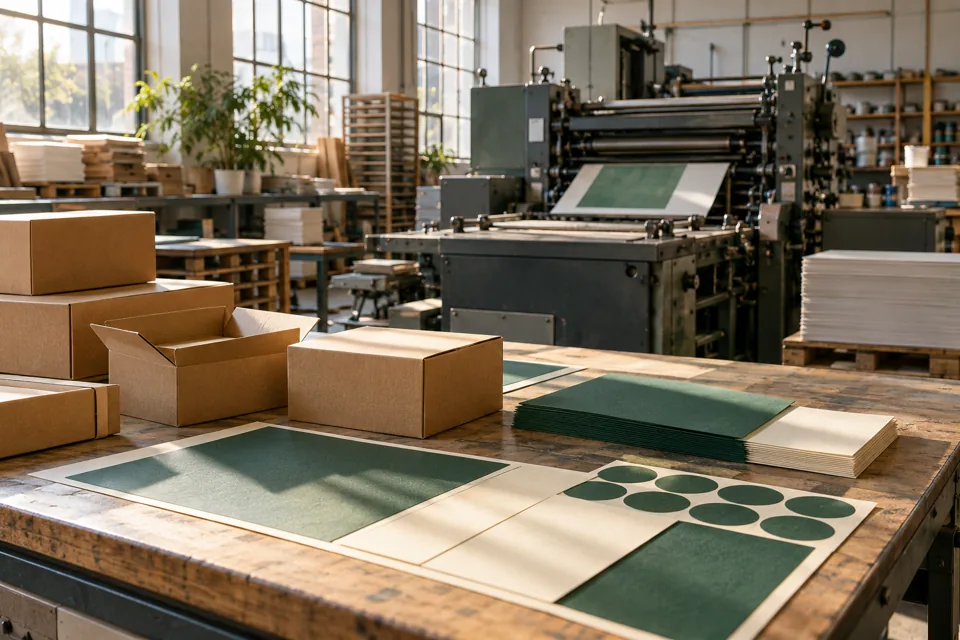
Use images to show the product, packaging and differences between options. Label illustrative visuals and use real photography where available.
4. Verifiable evidence
Present experience and work you can support. Get permission before publishing client names, testimonials or other restricted material.
5. A clear next step
Place a quote request or contact route near the relevant information. Keep the main action easy to understand.
6. Manageable content
Agree who updates products and specifications, and what content management, training and maintenance the project includes.
What should a quote form ask for?
Ask for the information your sales team needs to begin. Do not make the first form solve every pricing scenario, or demand technical details a buyer may not yet know.
| Sale type | Useful starting information | Next step |
|---|---|---|
| Ready-made product | Product, quantity, delivery area and contact details | Confirm stock and price |
| Custom manufacturing | Requirement, known dimensions or materials, estimated quantity | Confirm specifications |
| Business printing | Print type, size, quantity and known finish | Review files and production needs |
Build pages around the real offer
A practical starting structure is home, products or services, meaningful category pages, company information and contact or quote request. Choose languages your team can support. Avoid near-identical pages for every city or search phrase.
A product page brings together its name, images, available specifications and enquiry route. Add different buyer journeys only when the information genuinely differs.
Measure enquiries that progress
Agree what success means before launch: quote requests, actual conversations, relevant enquiries and outcomes your team records. A WhatsApp click is not a message or a sale.
Record the source, requested product and follow-up outcome. Incomplete enquiries may need better page information. Relevant enquiries that stall also require a review of response time, pricing and availability.
- Check the website and form on a phone.
- Assign responsibility for replies and product updates.
- Connect enquiries to their source where possible.
- Review enquiry quality, not traffic alone.
Agree the scope before development
Compare proposals by pages, products, languages, content and photography responsibilities, editing tools, forms, integrations, revisions, hosting, maintenance and access handover. Price alone does not show what is included.
You can start with a limited scope and expand after learning from buyers. The website works alongside the product, marketing and sales follow-up.
Common questions
Does a factory need an online store?
Not always. When pricing depends on quantity or specifications, a catalogue with a quote request may be the right first step.
Should we display prices?
Show a fixed price when it is approved and can be honoured. Explain the quote process when specifications change the price.
Can we update products ourselves?
Content management can be included. Agree the tools, access and training before development.